If you want a place that feels more connected than crowded, Carrollton deserves a close look. For many buyers, the appeal is not just finding a house, but finding a city where daily life feels manageable, active, and rooted in a real community. In Carrollton, you get a small-city setting with a college-town pulse, a lively downtown, and a housing market with more range than many buyers expect. Let’s dive in.
What living in Carrollton feels like
Carrollton is a mid-sized city in West Georgia with an estimated 2024 population of 28,306. It sits about 50 miles west of Atlanta, and city materials often describe it as about an hour from the city. That gives you some access to the broader metro while still living in a place with its own identity.
Daily life here feels more like a regional hub than a pass-through town. The city’s retail trade area serves more than 125,000 people, and major job sectors include education, healthcare, and manufacturing. In practical terms, that means Carrollton supports more shopping, services, and weekday activity than many towns of similar size.
The city also has a relatively short average resident commute of 18.2 minutes. At the same time, Carrollton does not have fixed-route public transit, so most residents rely on a car for everyday errands and commuting. If you are moving from a denser area, that is an important lifestyle difference to keep in mind.
Downtown Carrollton stands out
One of Carrollton’s biggest strengths is its downtown core. Historic Adamson Square anchors the area, with restaurants, shops, professional services, event spaces, and civic gathering spots all clustered nearby. It is the kind of downtown that gives the city a stronger sense of place.
City planning documents make it clear that downtown is meant to stay compact and pedestrian-oriented. The city emphasizes inviting streetscapes, public gathering spaces, public art, and a mix of dining, shopping, entertainment, and civic uses. That focus helps downtown feel active and intentional rather than scattered.
You will also find a mix of local businesses and casual places to gather. City materials highlight spots such as Gallery Row Coffee, Horton’s Books and Gifts, and Samba Loca, along with other restaurants, bars, and local businesses. For buyers who want easy access to local dining and a walkable core, this part of Carrollton is a major draw.
Arts and events add energy
Carrollton offers more arts and event activity than many buyers expect from a city this size. The Carrollton Center for the Arts has been a local hub for performing and visual arts since 2003, and the city reports an active calendar of exhibitions, performances, classes, camps, workshops, and special events.
Recurring events also shape the rhythm of the year. The city promotes annual favorites such as Mayfest, Taste of Carrollton, the Arts Festival of Carrollton, Amp events, Art Takeover, and Christmas in Carrollton. If you enjoy a place where there is often something going on, that steady programming adds real lifestyle value.
Outdoor living is part of daily life
Carrollton’s outdoor amenities are not just nice extras. They are woven into the city in a way that can affect how you choose where to live. The most notable example is the Carrollton GreenBelt, a 20-plus-mile bicycle and pedestrian trail system that circles the community and connects neighborhoods, schools, parks, shopping areas, UWG, and other destinations.
The GreenBelt includes six trailheads, one loop, and multiple connections across the city. For some buyers, that means easier access to walking, biking, and outdoor routines without having to drive to a separate recreation area. It also makes certain trail-connected areas especially appealing if everyday convenience matters to you.
Carrollton also has a broad park system for a city its size. Public spaces and facilities include Lakeshore Park, Lake Carroll Park, East Carrollton Recreation Center, Optimist Park, Hobbs Farm Park, and Castle Playground. Amenities across the system include walking trails, ballfields, a natatorium, fishing access, a spray park, a skateboard park, and lake-based recreation.
Recent public investment has supported upgrades such as pickleball courts, bark park improvements, sidewalks, lake and park improvements, and GreenBelt spur projects. That continued investment matters because it shows the city is still building on the outdoor features residents already use.
Housing in Carrollton offers real variety
Carrollton is not a one-style, one-price housing market. The city’s housing study shows that single-family detached homes make up the largest share of housing, but the broader picture is more mixed. About 35% of housing units are more than 50 years old, and student-centric housing accounts for 22% of the city’s housing stock.
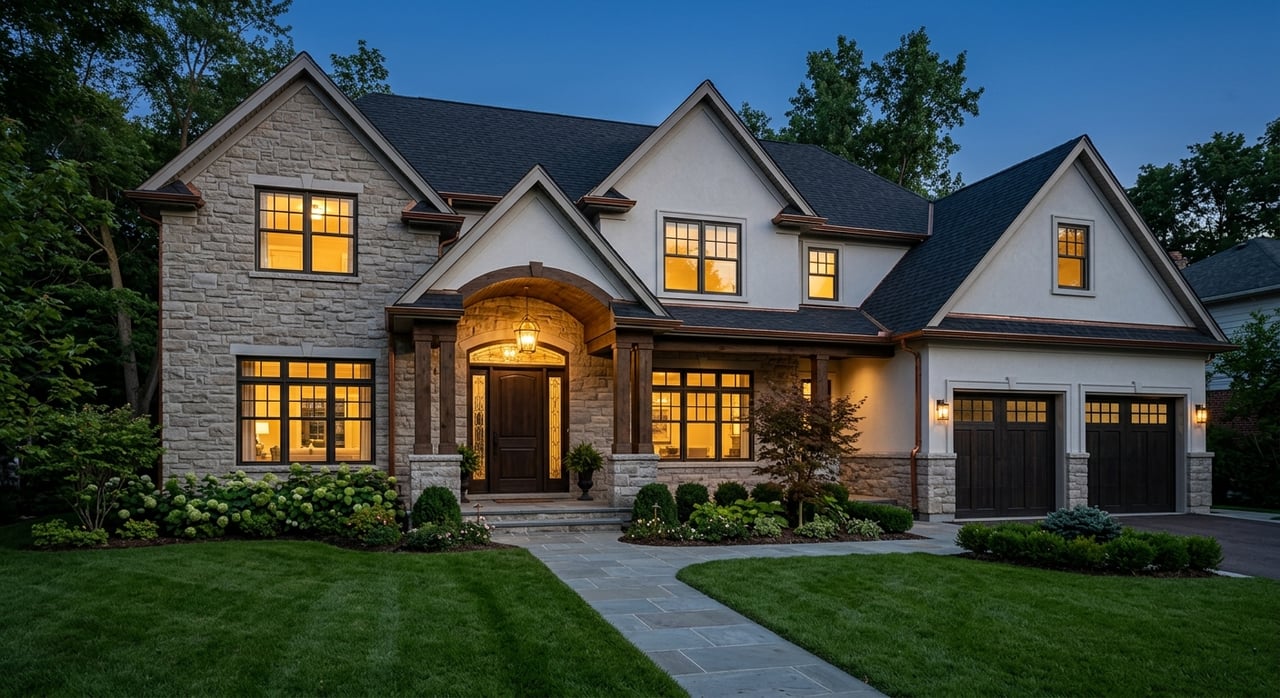
That mix creates a more layered market than many buyers first assume. You will find older in-town homes, rental-oriented areas influenced by the university, newer detached homes on the edges of the city, and some higher-end new construction or active-adult options. If you like comparing different lifestyle tradeoffs before you buy, Carrollton gives you room to do that.
A simple way to think about the city is by residential pattern:
- Older in-town areas: More traditional street grids, older cottages, ranches, bungalows, sidewalks, and a more connected feel
- Corridor areas: Places like Lake Carroll Village, Maple Street, and Bankhead Highway with redevelopment and streetscape focus
- Periphery and newer subdivisions: More suburban patterns, newer detached homes, and larger-lot options in some areas
The city’s planning documents specifically identify East and West Carrollton as traditional neighborhoods with sidewalks, smaller lots, on-street parking, and neighborhood-scale business patterns. By contrast, edge-of-city residential areas are generally more separated and less pedestrian-oriented. That difference can have a big impact on how your day-to-day life feels once you move in.
What homes cost in Carrollton
Price is one of the hardest things to summarize in Carrollton because the market covers a broad range. Public data points show that the Census Bureau lists a median owner-occupied home value of $311,100, Zillow reports an average home value of $286,558, and Realtor.com reported a median listing price of $355,000 and a median sold price of $335,000 in April 2026.
The city’s State of the City report also gives examples of newer housing supply at several price levels. Those examples include townhomes priced at $290,000, small cottages starting around $300,000, active-adult homes starting in the $400,000s, and single-family homes priced from $650,000. That spread reinforces an important point: your options can look very different depending on the area, age, and type of property you want.
For buyers, that range can be a real advantage. With the right guidance, you may be able to spot hidden value in an older home, compare newer construction against established neighborhoods, or find a property with stronger long-term fit than a quick online search suggests.
University influence shapes the city
The University of West Georgia is a major part of life in Carrollton. UWG reports nearly 13,000 students and more than 100 programs, with a Carrollton campus that spans more than 665 acres across its locations. That presence adds steady weekday energy and helps support the city’s college-town feel.
You can see that influence in several parts of the market. The university helps shape housing demand, adds activity near campus and downtown, and contributes to arts, events, and local business traffic. If you want a quiet rural environment, Carrollton may feel more active than expected. If you want a city with movement and local energy, UWG is a big reason Carrollton delivers that.
It also helps explain why student-oriented housing makes up a noticeable share of the local housing stock. That does not define the whole market, but it is a factor worth understanding when you compare neighborhoods, property types, and resale considerations.
Schools and district boundaries matter
If schools are part of your move, Carrollton is a market where district lines deserve close attention. Carrollton City Schools and Carroll County Schools are separate systems, and a Carrollton address may fall into either one depending on location. Buyers should verify school assignment by address before making a decision.
Carrollton City Schools reports that its four schools share a 130-acre campus. The district’s current profile lists 5,560 students, a 92% graduation rate, and a 6:1 student-teacher ratio for the 2023 to 2024 school year.
Carroll County Schools serves areas beyond the city district and reported a 97.7% graduation rate in 2025. The district also said it earned Cognia’s System of Distinction recognition. For relocating buyers, the key takeaway is simple: do not assume the school system based on mailing address alone.
Who Carrollton fits best
Carrollton tends to work especially well for buyers who want a local downtown, regular community events, and access to parks and trails without giving up everyday conveniences. It can also be a strong fit if you want more housing variety than you might find in a smaller rural town.
You may feel especially at home here if you are looking for:
- A small-city setting with a clear civic core
- A downtown with dining, events, and gathering spaces
- Trail access and parks built into everyday life
- Housing options that range from older in-town homes to newer subdivisions
- A market with some college-town energy but a more grounded pace than major metro suburbs
The main tradeoff is transportation style. Outside downtown and trail-connected areas, daily life is still car-dependent because the city does not offer fixed-route public transit. For many buyers, that is a manageable trade. It is simply better to know it up front.
Why local guidance matters in Carrollton
Carrollton looks straightforward on a map, but the buying experience often comes down to details. One street may offer a more walkable setup, while another has a more suburban feel. One older home may have real character and upside, while another may need more updates than you want to take on.
That is where a design-aware, local perspective can make a difference. When you understand not just price, but layout, location pattern, neighborhood feel, and future potential, you can make a smarter decision with more confidence. In a market with this much variety, that kind of guidance matters.
If you are thinking about buying or selling in Carrollton, Curated Real Estate offers thoughtful, hands-on guidance to help you see the full potential of every move.
FAQs
What is Carrollton, Georgia known for?
- Carrollton is known for its historic downtown around Adamson Square, the University of West Georgia, the Carrollton GreenBelt, and a steady calendar of arts and community events.
Is Carrollton, Georgia a good place for buyers who want walkability?
- Carrollton offers the most walkable feel in and around downtown and in some older traditional neighborhood areas, while many outer areas of the city are more car-dependent.
What is the housing market like in Carrollton, Georgia?
- Carrollton has a mixed housing market with older in-town homes, student-influenced housing, newer subdivisions, townhomes, cottages, and some higher-priced new construction and active-adult options.
How much do homes cost in Carrollton, Georgia?
- Public data points show a broad range, including a $311,100 median owner-occupied value from the Census Bureau, a $286,558 average home value from Zillow, and a $355,000 median listing price with a $335,000 median sold price reported by Realtor.com in April 2026.
Does Carrollton, Georgia have public transportation?
- Carrollton does not have fixed-route public transit, though UWG offers student-only bus service and Carroll County provides rural transportation on a per-call basis.
What school districts serve Carrollton, Georgia?
- Carrollton addresses may be served by either Carrollton City Schools or Carroll County Schools, so buyers should confirm school assignment by the specific property address.